
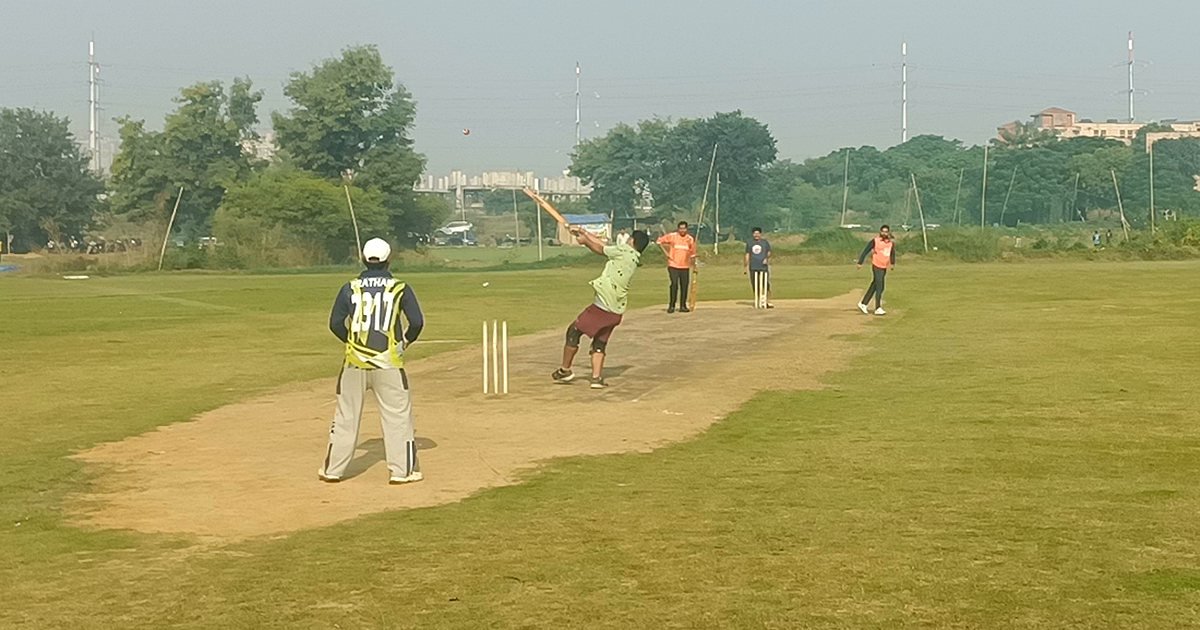
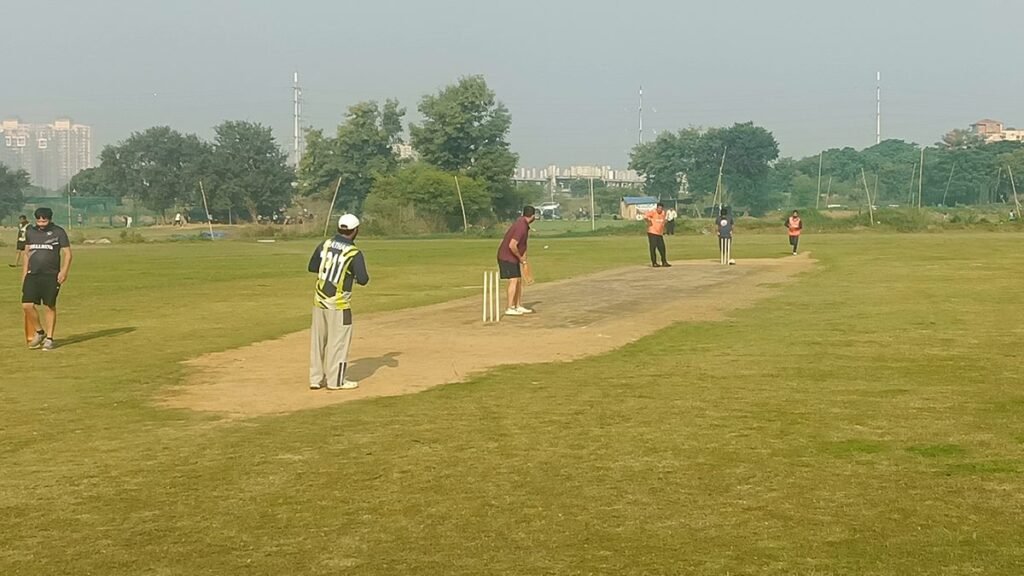
Day 2 of Criko Diaries came two days after Day 1. A national holiday gave us a free morning, so Kingslayer played Rudra XI at Mid On Cricket Ground in Greater Noida: 20 overs a side, tennis ball, first ball at 8:36 am. We made 239. Rudra XI chased it with 21 balls to spare. This post is about why a total that big wasn’t safe, and what the scorecard says we should do differently next time.
Quick Answer
In 20-over tennis-ball cricket, a big total is only as safe as the first eight overs of the defense, and the catches you hold in them. By the 9th over Rudra XI were about 40 runs ahead of where we’d been at the same point, and from there the chase never got hard. We also put down two catches in the chase. Two other things cost us: we lost two wickets in two balls just as our own innings was accelerating, and we bowled 19 wides and no-balls in a chase that was already going quickly.
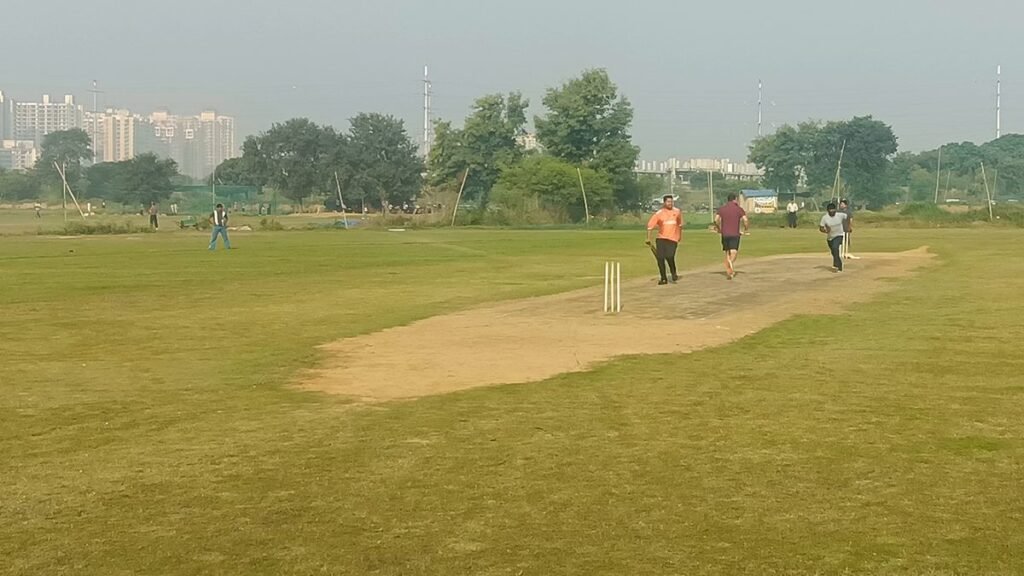
The Match in Numbers
| Format | 20 overs a side, tennis ball |
| Venue | Mid On Cricket Ground, Greater Noida |
| Toss | Rudra XI won and chose to field |
| Kingslayer | 239/8 (20 overs, 11.95 an over) |
| Rudra XI | 244/5 (16.3 overs, 14.79 an over) |
| Result | Rudra XI won by 5 wickets, with 21 balls to spare |
| Extras received by Kingslayer | 25 (20 wides, 3 no-balls, 2 byes) |
| Extras conceded by Kingslayer | 20 (15 wides, 4 no-balls, 1 bye) |
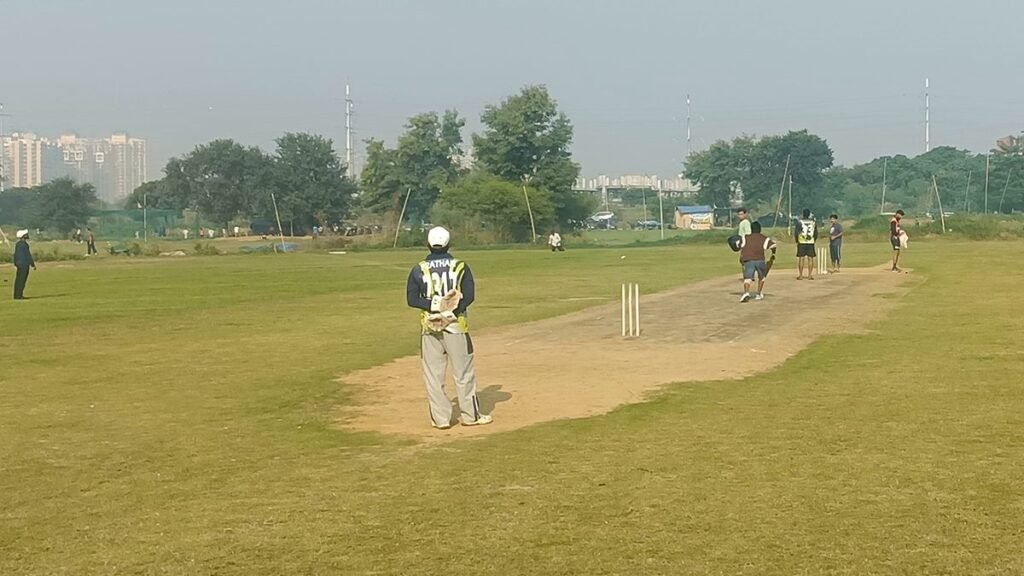
This time we filmed the match on a phone on a tripod. The highlights below show the boundaries and wickets we caught on camera, with the live score running along the bottom during the chase.
Watch the Highlights
Where the Chase Was Won
We didn’t have the full over-by-over breakdown for this match, but the fall of wickets gives us the score at ten points in each innings, which is enough to compare the two. The chart below joins those points.
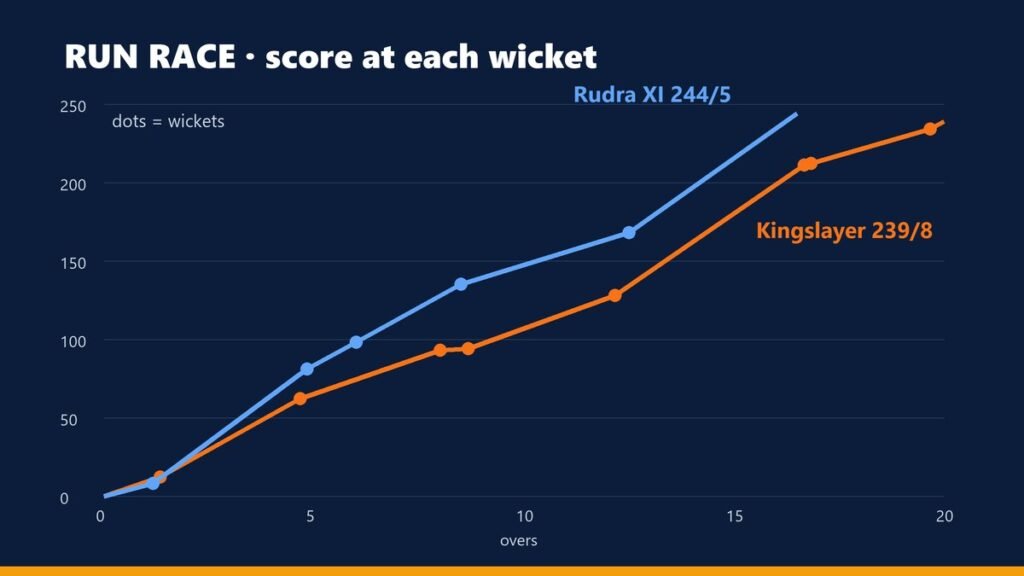
| Around the… | Kingslayer | Rudra XI | Gap |
|---|---|---|---|
| 5th over | 62 after 4.4 overs | 81 after 4.5 overs | about 19 |
| 9th over | 94 after 8.4 overs | 135 after 8.3 overs | about 41 |
| 13th over | 128 after 12.1 overs | 168 after 12.3 overs | about 40 |
The gap opened in the first nine overs and then stayed about the same. That matters because of what it did to the asking rate. A target of 240 asks for 12 an over from the first ball. By the time Rudra XI reached 135 in 8.3 overs, they needed 105 from 69 balls, a required run rate of about 9.1. A chase that starts at 12 an over and drops to 9 doesn’t feel like a big chase any more. The batters can take singles, wait for the bad ball, and still stay ahead.
From 168/5 they finished with an unbroken stand of 76 off 24 balls. But that finish only worked because the first nine overs had already taken the pressure off.
Two Dropped Catches
The scorecard doesn’t show it, but the chase turned on two catches we put down. A scorecard records the wickets that happened, not the ones that nearly did, so it’s easy to forget them by the next match. In a chase where the batting side was already ahead of the rate, each dropped catch gave a set batter more balls to keep scoring, and a 20-over game doesn’t give many chances back.
Every team drops catches. The fix isn’t blaming whoever was under the ball. It’s making catching part of every warm-up, because a tennis ball hit high on an open ground swirls and drops late, and the only way to get used to that is to catch a lot of them.
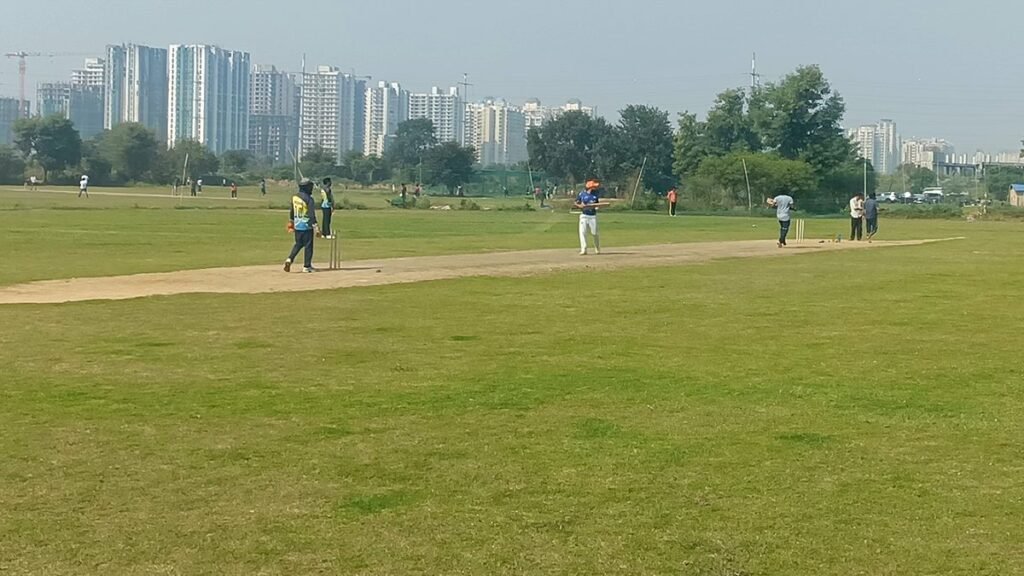
Our Innings: Two Wickets in Two Balls
Our own innings had the opposite shape. We were 94/4 after 8.4 overs, a slow start by tennis-ball standards. Then came the best batting of the day: from 128 at 12.1 overs to 211 at 16.4 overs, 83 runs in 27 balls, more than 18 an over.
Then two wickets fell in two balls, at 211 and 212. Our last 20 balls brought 28 runs. If we’d kept going at even 12 an over for those 20 balls, we’d have made about 251. If we’d kept the previous pace, nearer 270. It’s not certain that would have changed the result, but it would have made the chase start at 12.5 to 13.5 an over instead of 12.
The lesson for the batting side: when two wickets fall together late in an innings, the next batter’s job isn’t to rebuild. It’s to keep the scoring going. In a 20-over game there’s no time to start again.
Extras, Again
Day 1’s lesson was the hidden cost of a wide. Two days later we bowled 15 wides and 4 no-balls, so Rudra XI got 19 extra deliveries. Each one has to be bowled again, so the real cost is the penalty run plus whatever the batters score off the extra ball.
Rudra XI scored 224 runs off the bat from 103 balls they could hit (99 legal balls plus 4 no-balls), about 2.2 runs a ball. On Day 1’s rough formula, each wide or no-ball cost us about 3.2 runs, so the 19 extra deliveries were worth about 60 runs. That’s an estimate, not an exact figure, but it’s the size of a whole partnership. In a chase that finished with 21 balls to spare, it’s a big part of why there were balls to spare.
To be fair to our bowlers, Rudra XI gave us even more: 20 wides and 3 no-balls. Tennis-ball cricket seems to produce a lot of extras on both sides, which is a reason to work on it, not a reason to accept it.
How to Defend a Total in Tennis-Ball Cricket
A tennis ball doesn’t swing or seam much, it comes on to the bat, and mishits still travel. So the batting side can attack from ball one in a way it can’t with a leather ball. These are the habits worth working on.
- Practice high catches before every match. Ten minutes of skyers in the warm-up is the cheapest way to save runs. Two drops in one chase is a habit worth breaking.
- Treat the first eight overs as the whole defense. Put your most reliable bowlers on first, not last. If the asking rate is still above the target rate after eight overs, the chasing side is under pressure. If it’s below, they’re cruising.
- Bowl to the field you set. With a tennis ball, a ball that’s a bit short sits up to be hit. Decide with the captain whether the plan is full and straight or back of a length, set the field for it, and don’t switch between the two in the same over.
- Change the pace, not the line. Pace off the ball is harder to time with a tennis ball than extra speed. Wides come from trying too many different lines.
- Protect the boundaries early. In tennis-ball cricket the ball goes a long way off a half-hit. A single conceded is better than the boundary, especially while the asking rate is still high.
- When batting, don’t let a double wicket stop the scoring. Plan who goes in after a late collapse and what their job is: keep it moving.
- Count extras every match. One bad match is a blip. Two in a row is a habit, and the only way to spot it is to keep the numbers.
Frequently Asked Questions
What is a good score in a 20-over tennis-ball match?
It depends heavily on the ground size and the ball, so there’s no single answer. Our two matches so far saw 286, 239 and 244 in 20 overs or less, so on a big open ground with a tennis ball, scores of 200 or more are common. A better question than “is this a good score?” is “what does the chasing side need per over, and how quickly can we push that up?”
How do you work out the required run rate in a chase?
Divide the runs still needed by the balls left, then multiply by 6. Count the overs in balls: 8.3 overs means 8 overs and 3 balls, so 51 balls bowled and 69 left in a 20-over innings. Our required run rate calculator does the counting for you.
Are wides called differently in tennis-ball cricket?
Often, yes. Local matches usually agree their own wide rules before the toss, and many call anything down the leg side a wide. Agree it before the first ball so both sides bowl to the same standard.
Next Match
One win and one loss from the first two diaries. Extras showed up in both, and this time two dropped catches as well. Extras are the number to watch next time. You can follow every match here in Criko Diaries and on our YouTube channel, Criko Cricket Diaries. If you play weekend cricket too, try scoring your next match in the Criko app. It’s free and keeps every ball, so you can find your own lesson afterwards.