
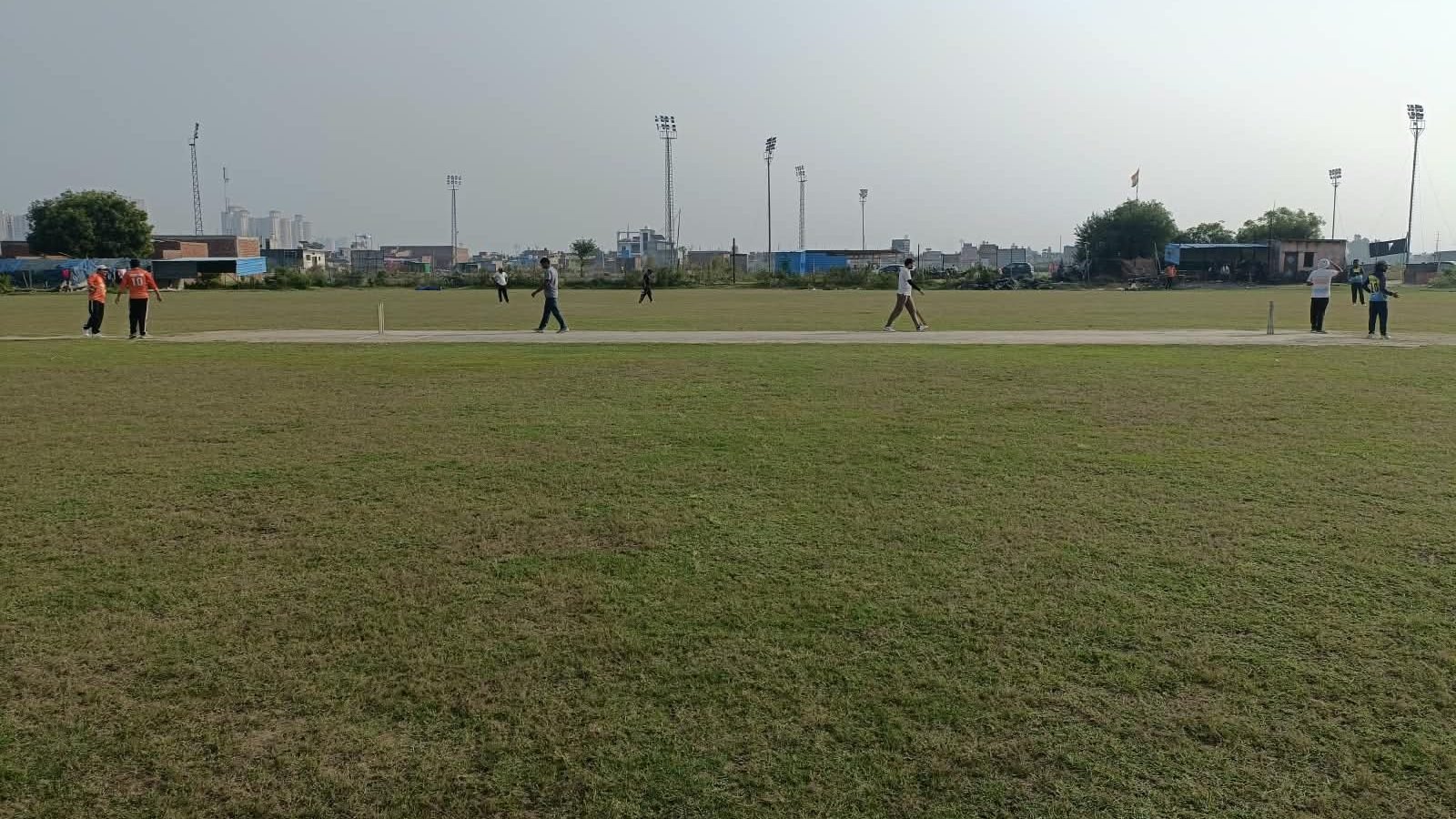
Day 3 of Criko Diaries was a Sunday afternoon match against Ghaziabad Super Kings at Hare Krishna Cricket Ground 3 in Greater Noida: 20 overs a side, tennis ball, first ball at 3 pm. They won the toss, batted, and made 197/8. We chased it down with 17 balls to spare and three wickets left. After a loss on Day 2, this one shows how a 200-run chase actually gets done: not by chasing 198, but by chasing the asking rate a few overs at a time.
Quick Answer
To chase around 200 in a 20-over tennis-ball match, split the chase into four blocks of five overs and try to bring the required rate down in each block. The first block matters most. We were 66/1 after five overs, which took the asking rate from 9.9 to 8.8 and left nine wickets in hand. After ten overs it was 7.9, and after fifteen it was 5.8. We lost five wickets in the middle overs and it didn’t matter, because by then the chase only needed about a run a ball.
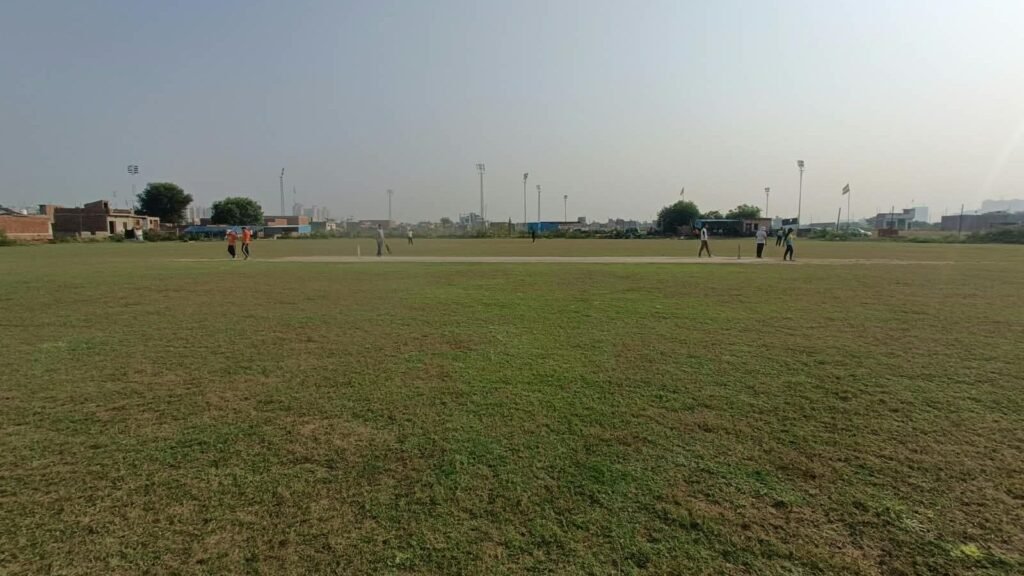
The Match in Numbers
| Format | 20 overs a side, tennis ball |
| Venue | Hare Krishna Cricket Ground 3, Greater Noida |
| Toss | Ghaziabad Super Kings won and chose to bat |
| Ghaziabad Super Kings | 197/8 (20 overs, 9.85 an over) |
| Kingslayer | 202/7 (17.1 overs, 11.77 an over) |
| Result | Kingslayer won by 3 wickets, with 17 balls to spare |
| Boundaries | Kingslayer 18 fours and 12 sixes; Ghaziabad Super Kings 14 fours and 9 sixes |
| Extras received by Kingslayer | 19 (14 wides, 1 no-ball, 4 leg byes) |
| Extras conceded by Kingslayer | 27 (12 wides, 6 no-balls, 9 leg byes) |
This time the match was filmed on a phone from behind the bowler’s stumps, in short clips during our chase. The highlights below put those clips together, with the score at the 5, 10 and 15-over marks, the winning six, and the run race at the end.
Watch the Highlights
The Chase in Four Blocks
A target of 198 asks for 9.9 runs an over from the first ball. That number sounds big, but it isn’t fixed. Every over you score more than the asking rate, it comes down. Every over you score less, it goes up. Here is how it moved in our chase, five overs at a time.
| After | Kingslayer | Needed | Asking rate | Ghaziabad Super Kings at the same point |
|---|---|---|---|---|
| Start | 0/0 | 198 from 120 balls | 9.9 | – |
| 5 overs | 66/1 | 132 from 90 balls | 8.8 | 41/2 |
| 10 overs | 119/3 | 79 from 60 balls | 7.9 | 104/4 |
| 15 overs | 169/6 | 29 from 30 balls | 5.8 | 152/7 |
| 17.1 overs | 202/7 | Won | – | – |
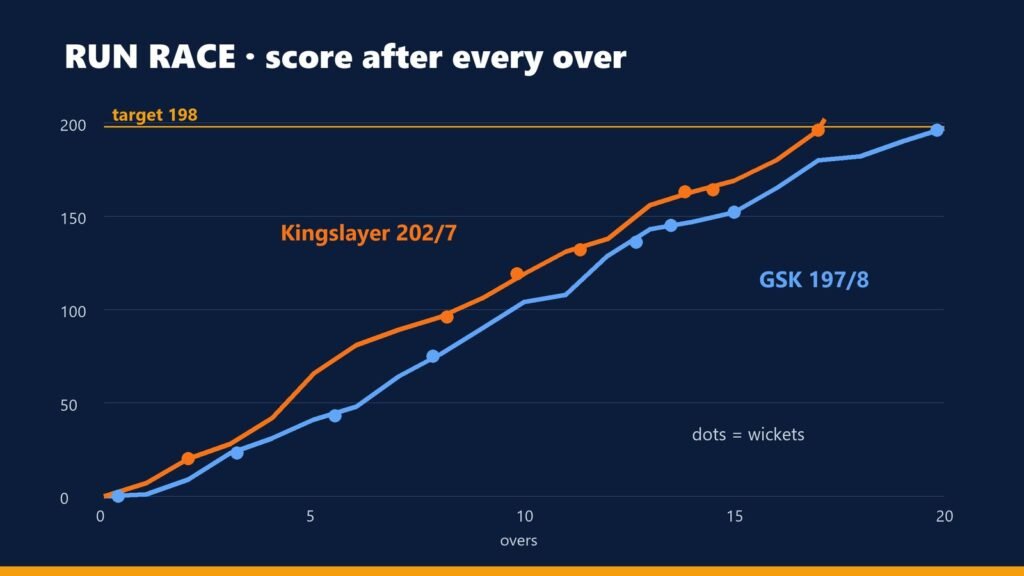
Two things stand out. The asking rate came down in every block, so the chase got easier as it went on instead of harder. And we were ahead of Ghaziabad Super Kings’ score at the end of every single over, from the 1st to the 17th. That’s the simplest way to know a chase is on track: if you’re ahead of where the other side was at the same point, you’re ahead of the game. The required run rate is the same idea in one number.
Why the First Five Overs Decided It
After six overs we were 81/1. At the same point Ghaziabad Super Kings had been 48/3. That 33-run gap, with two more wickets in hand, is what made the rest of the chase calm.
The 5th over was the biggest of the innings: 24 runs, with two wides in it. Those two wides were two extra balls in an over we were already scoring off, and that’s how a single over can move the asking rate by a full run. On Day 2 we were on the wrong end of the same thing, when Rudra XI got about 40 runs ahead of us by the 9th over and never looked back. You can read that one in Why 239 Wasn’t Enough.
The other half of a fast start is keeping wickets. We lost one wicket in the first eight overs. In a 200-run chase that matters more than the runs, because each set batter who stays in can keep scoring at 10 or 12 an over without taking a risk on every ball. A fast start that costs three wickets puts new batters in just as the field spreads out, and they have to start again at the hardest time.

The Wobble That Didn’t Matter
The middle of our chase wasn’t smooth. From 96/1 in the 9th over we went to 164/6 in the 15th, losing five wickets for 68 runs. In a chase that was still asking for 10 an over, that’s how matches get lost.
It didn’t hurt us because of the start. At 164/6 we needed 34 from 33 balls, about a run a ball. The new batters didn’t have to slog. They could take singles, wait for the bad ball, and the boundaries still came: the 17th over went for 16 and the chase finished with a six off the first ball of the 18th. A good start doesn’t stop wickets falling later. It means that when they fall, the batters coming in have a simple job.
Boundaries, Not Just Run Rate
Tennis-ball cricket on a big open ground is a boundary game. We hit 30 boundaries (18 fours and 12 sixes), worth 144 of our 183 runs off the bat. Ghaziabad Super Kings hit 23, worth 110 of their 170. The difference, 34 runs in boundaries, is far bigger than the five runs we finished ahead by.
That doesn’t mean swing at everything. It means that in a 200-run chase you need roughly one boundary an over on top of the singles. If an over goes by without one, the next over needs two. Counting boundaries per over is an easy way for the batters to know whether they need to take a risk or just keep the strike moving.
Extras: Still Our Weak Spot
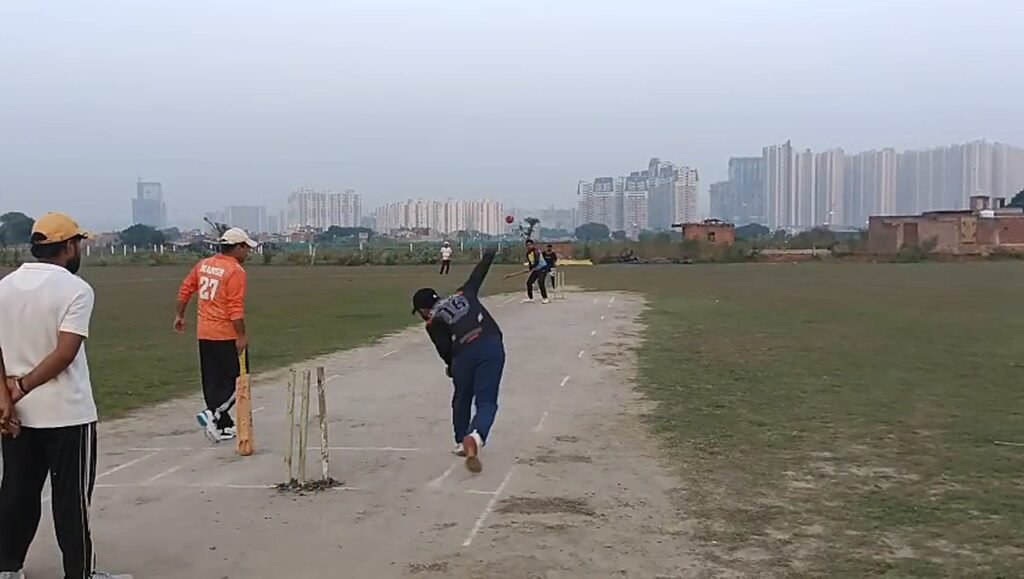
We won, but the bowling numbers repeat the warning from Day 1 (the hidden cost of a wide) and Day 2. We gave away 27 extras: 12 wides, 6 no-balls and 9 leg byes. That’s 18 extra deliveries in one innings, three full overs’ worth. We conceded 20 extras on Day 2, so this is getting worse, not better.
Ghaziabad Super Kings were 152/7 after 15 overs and then made 45 from the last five, with one batter retiring hurt along the way. A tighter finish with fewer extras could have kept the target nearer 180. We got away with it today because the chase went well. In a closer game, 27 extras is the margin.
How to Chase 200 in a 20-Over Tennis-Ball Match
These are the habits that worked for us, and the ones we still need to work on.
- Chase the asking rate, not the target. Before the chase starts, work out the rate (198 in 20 overs is 9.9) and check it at the end of every five overs. If it’s coming down, you’re winning the chase. If it’s going up, change something before the next five.
- Make the first five overs the biggest. The field is up, the ball is new and hard, and the bowlers haven’t settled. Aim to be at or above the asking rate after five overs, ideally with no more than one wicket down.
- Keep wickets for the middle. In tennis-ball cricket the fast start comes from timing, not slogging. One wicket in eight overs is worth more than an extra 10 runs with three down.
- Compare with the other innings. Write down their score after each over (the scoring app does this for you) and check whether you’re ahead or behind at the same point. It’s easier to read than a run rate in the middle of a match.
- Look for one boundary an over. Around 200, singles alone won’t do it. If an over goes by without a boundary, the next batter knows the job.
- Don’t panic after a collapse. If the start has done its work, a wobble in the middle overs only leaves a run-a-ball target. Keep the strike moving and let the bad balls come.
- Fix the bowling before you need to chase. The best way to chase 200 is to keep the target under 200. Wides and no-balls are the part of that you control.
Frequently Asked Questions
Is 200 a winning score in tennis-ball cricket?
Not in our matches so far. The last two first-innings totals, 239 on Day 2 and 197 today, were both chased down. On a big open ground with a tennis ball, 200 is a good score, not a safe one. What decides it is how the first five overs of the chase go.
What’s a good score after five overs when chasing 200?
A target of 200 in 20 overs needs 10 an over, so 50 after five overs keeps you level. Anything above that brings the asking rate down. We had 66/1, which made the remaining 15 overs need 8.8 an over. Read more in our guide to powerplay rules and tactics.
How do you work out the required run rate during a chase?
Divide the runs still needed by the balls left, then multiply by 6. After 15 overs we needed 29 from 30 balls: 29 ÷ 30 × 6 = 5.8 an over. Our required run rate calculator does it for you, including overs written as 14.3 and so on.
Next Match
Two wins and one loss from three diaries. Extras are the number to bring down next Sunday. You can follow every match here in Criko Diaries and on our YouTube channel, Criko Cricket Diaries. If you play weekend cricket too, try scoring your next match in the Criko app. It’s free, it keeps every ball, and it shows you the over-by-over numbers you need to find your own lesson.