
Cricket calculators
Cricket maths that respects the over.
Run rate, required rate, net run rate and seven more calculators. Every one counts legal balls, so 17.4 overs means 17 overs and 4 balls, never 17.4.
New · Live scoring
Score your gully match with one thumb
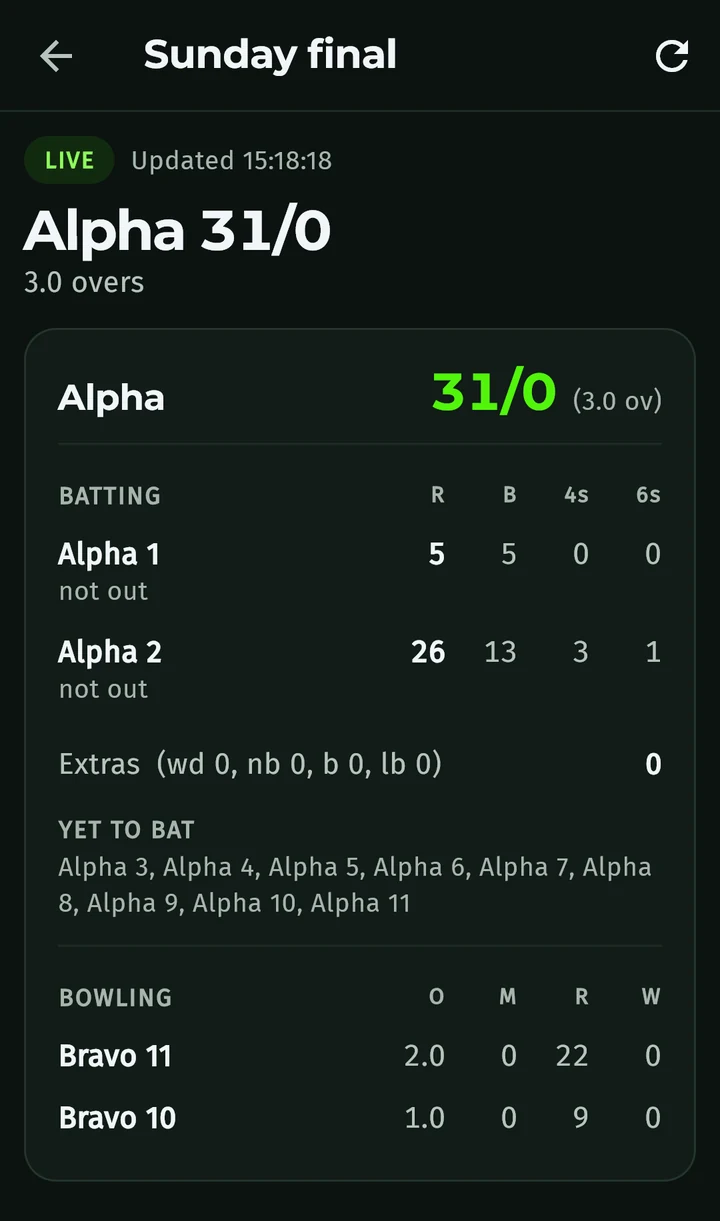
Watch the ball, tap what happened, look back up. The Criko scorer keeps the score, the over and the chase for you, then turns the result into an image for WhatsApp.
- One tap a ball. Big keys for 0 to 6, wickets and extras, all within thumb reach.
- Undo anything. A wrong tap is one button away from gone: runs, extras and wickets.
- Share the scorecard. A clean image of the score, over by over or at the result.
- Free and private. No sign-up, and the match never leaves your phone.
New · Android app · Free
Score it on the app. Share it live.
The free Criko app for Android scores ball by ball, even with no signal, and lets your team watch the scorecard live on their phones.
- Free, no subscription. Every feature, with nothing to buy or renew.
- Live scorecard. Send a link or QR code, and everyone follows every ball.
- Works offline. Scoring never waits for the internet.
- Backed up. Your matches and teams are saved to your account.
- Player careers. Runs, wickets and averages add up across matches.
Ten calculators, one rulebook
Free, instant, and they work on any phone at the ground.
Bowling
Match & conversions
Why 17.4 overs isn’t 17.4
The digit after the point counts balls, and an over has six. Treat it as a decimal and every rate comes out wrong.
- 1 · Read it17.4 ov17 overs and 4 balls
- 2 · Count balls106 balls17 × 6 + 4
- 3 · Do the maths17.67 ov165 runs → 9.34 per over, not 9.48
From the guides
- How to Chase 200 in Tennis-Ball Cricket: Lessons From a 198 ChaseDay 3 of Criko Diaries: Kingslayer 202/7 beat Ghaziabad Super Kings 197/8 in a 20-over tennis-ball match, and how to pace a 200-run chase five overs at a time.
- How Is Bowling Average Calculated? And How It Differs From EconomyBowling average is the number of runs a bowler concedes per wicket taken. Divide the runs conceded by the wickets, and a lower figure is better. A bowler who has conceded 312 runs for 14 wickets averages 22.29. Wides and no-balls count against the bowler, but byes, leg byes and run outs don’t.
- Why 239 Wasn’t Enough: Defending a Total in Tennis-Ball CricketDay 2 of Criko Diaries: Kingslayer 239/8 v Rudra XI 244/5 in a 20-over tennis-ball match, and why the first eight overs decide a defence.